- OpenAI CFO Sarah Friar confirmed the company plans to allocate a portion of its IPO to retail investors, a departure from standard tech-IPO practice.
- OpenAI completed its conversion from a nonprofit to a for-profit public benefit corporation in 2025, a structural prerequisite for a public market listing.
- The company was last valued at approximately $300 billion following a $40 billion funding round led by SoftBank in early 2025.
- No IPO filing date or exchange has been officially confirmed as of April 9, 2026.
What Happened
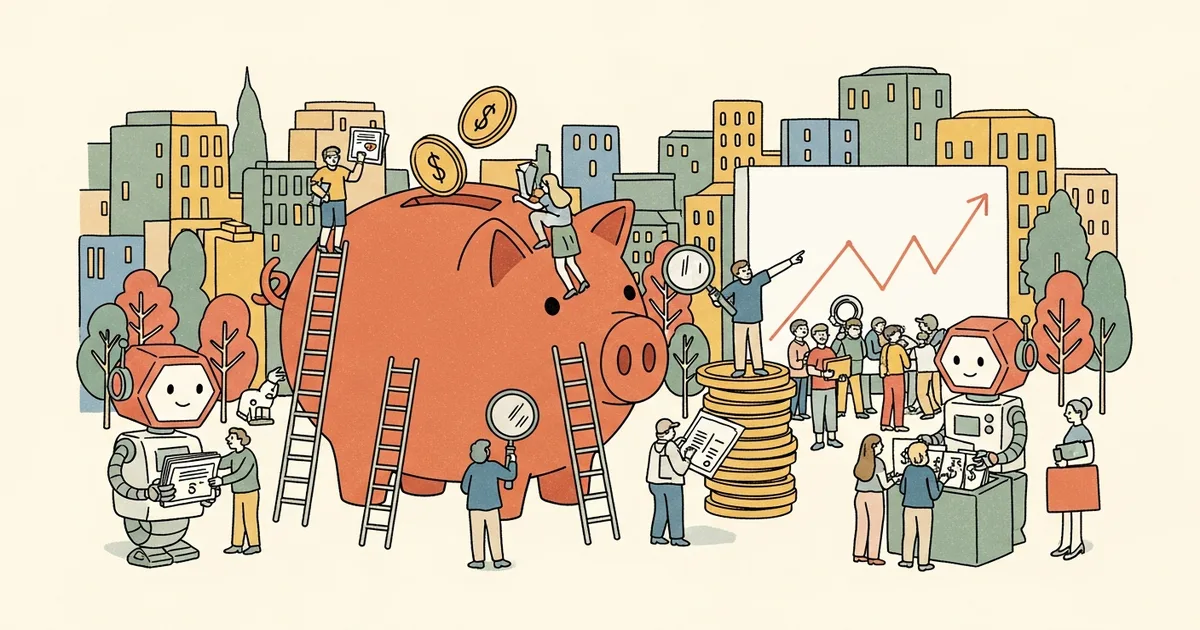
OpenAI chief financial officer Sarah Friar said the company intends to reserve a portion of its initial public offering for retail investors, according to a report published by CNBC. Friar did not specify a percentage of shares to be set aside or name a retail brokerage platform through which access would be provided. The comments represent the first public confirmation from an OpenAI executive that non-institutional investors will have a path to participate in the offering.
Why It Matters
Retail access to high-profile technology IPOs has historically been limited. Institutional investors — mutual funds, hedge funds, and sovereign wealth vehicles — typically absorb the bulk of pre-market allocations, leaving individual investors to buy in the secondary market at prices that already reflect opening-day premiums. OpenAI’s stated intention to include retail participants follows a pattern established by a small number of consumer-facing companies, including Robinhood, which allocated 35 percent of its 2021 IPO to its own retail customers via an IPO Access feature. Whether OpenAI will use a similar direct-to-consumer mechanism or route allocation through underwriting banks has not been disclosed.
The announcement comes after OpenAI completed its conversion from a nonprofit subsidiary structure to a for-profit public benefit corporation in 2025, removing a key structural barrier to a public listing. The PBC designation retains certain governance constraints, including obligations to a public benefit mission, which OpenAI has identified as the responsible development of artificial general intelligence.
Technical Details
OpenAI closed a $40 billion funding round in early 2025, led by SoftBank Group, which set the company’s post-money valuation at approximately $300 billion — making it one of the most highly valued private companies in history at the time of that close. The round included a provision tying a portion of SoftBank’s committed capital to the completion of the PBC conversion, which was subsequently finalized. OpenAI’s annualized revenue run rate had reached approximately $5 billion by mid-2024, according to figures the company shared with investors, though the company has disclosed ongoing operating losses driven by compute costs associated with training and serving large language models. The company operates its own data center infrastructure under the “Stargate” initiative, a joint venture with SoftBank and Oracle announced in January 2025 and targeting $500 billion in domestic AI infrastructure investment over four years.
Who’s Affected
Individual investors who use ChatGPT or OpenAI’s API products — and who have sought exposure to the company’s equity — stand to benefit directly if the retail allocation materializes at meaningful scale. Institutional investors and underwriting banks, including those expected to lead the offering, will need to negotiate share distribution mechanics that accommodate both retail and institutional demand. Competing AI companies including Anthropic and xAI remain private, meaning an OpenAI listing would give public-market investors a rare direct equity stake in a frontier AI developer.
What’s Next
OpenAI has not filed an S-1 registration statement with the U.S. Securities and Exchange Commission as of April 9, 2026, and no formal IPO timeline has been publicly confirmed. Friar’s comments suggest internal preparations are sufficiently advanced that retail allocation decisions are being made, which typically occurs in the months preceding a formal filing. Market conditions and ongoing regulatory scrutiny of the AI sector — including the FTC’s review of Microsoft’s partnership with OpenAI — may affect the timeline.