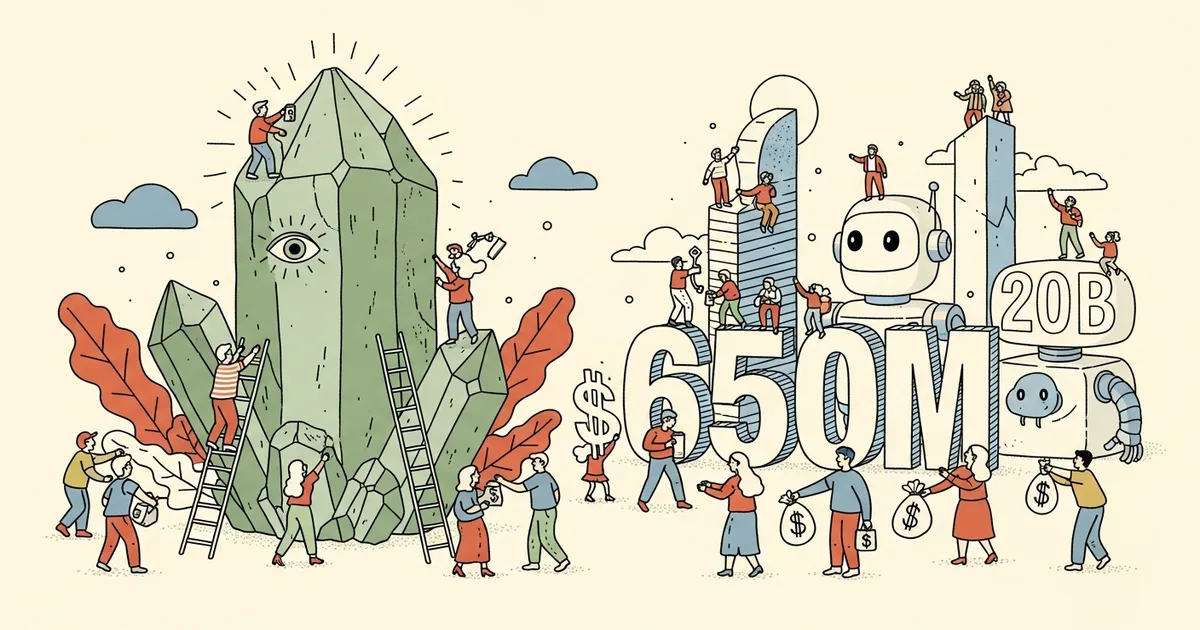
- Groq is raising $650 million from existing investors to grow its inference-cloud business, per Axios.
- The round follows December’s $20B not-an-acquisition deal with Nvidia, which involved key employee departures plus licensing Groq’s hardware tech to Nvidia.
- Groq’s existing backers Disruptive and Infinitium have agreed to fill the round if other existing investors don’t take their pro-rata shares.
- Groq’s new direction is led by interim CEO Adam Winter and interim CFO Matt Eng.
What Happened
Groq is raising $650 million from existing investors to grow its inference neocloud business, TechCrunch reported, citing Axios. The new direction is led by interim CEO Adam Winter and interim CFO Matt Eng. Groq’s existing backers Disruptive and Infinitium have agreed to fill the round if other existing investors don’t take their pro-rata shares — effectively guaranteeing the close.
Why It Matters
The raise is the first major post-Nvidia-deal capital event for Groq and clarifies the strategic direction. In December 2025, Groq struck what TechCrunch describes as ‘one of those not-an-acquisition agreements with Nvidia for a reported $20 billion.’ The deal involved the departure of senior Groq employees to Nvidia and the licensing of Groq’s hardware technology — preserving Groq as an independent entity while transferring meaningful technical and personnel value to Nvidia.
What’s left at Groq is the inference-cloud business: hosting Llama, Mixtral, Qwen, DeepSeek, and other open-weight models on Groq’s homegrown LPU (Language Processing Unit) hardware. The category — inference-layer companies offering open-weight model hosting at competitive prices — has consolidated through 2026, with Fireworks AI (reportedly at $15B valuation), Together AI, Anyscale, and Modal all in the upper tier alongside Groq.
Technical Details
The $650 million round is described as ‘effectively guaranteed’ because backstop commitments from Disruptive and Infinitium would fill any gap from other existing investors not taking their pro-rata shares. Inference — the processing that happens after an AI prompt — is a much larger commercial market than model training, where Nvidia GPUs dominate. Groq’s LPU architecture is specifically optimized for inference workloads.
The December $20B Nvidia deal mechanics: a ‘not-acqui-hire’ structure means Groq’s investors got paid out in cash for what would have been Nvidia’s largest purchase if it had been a full acquisition. The licensing component lets Nvidia incorporate Groq’s hardware-design innovations into Nvidia’s own next-generation inference products. The personnel transfer brought senior Groq engineering talent into Nvidia.
Who’s Affected
Groq’s existing investors gain a second bite at the apple — having been partially cashed-out in the Nvidia deal, they can now back the inference-cloud business. Groq’s enterprise customers (developers and companies hosting open-weight model workloads) gain confidence in continued platform investment. Direct competitors (Fireworks AI, Together AI, Anyscale, Modal) face pricing pressure on inference contracts. Nvidia, which now owns Groq’s licensed hardware tech, gains compounding capability gains in its own inference-product lineup.
What’s Next
Groq has not announced specific use-of-proceeds detail beyond growing the inference cloud business. The interim-CEO transition suggests a permanent CEO search is in flight. Industry watchers should track Groq’s customer-disclosure cadence and pricing changes through the rest of 2026.