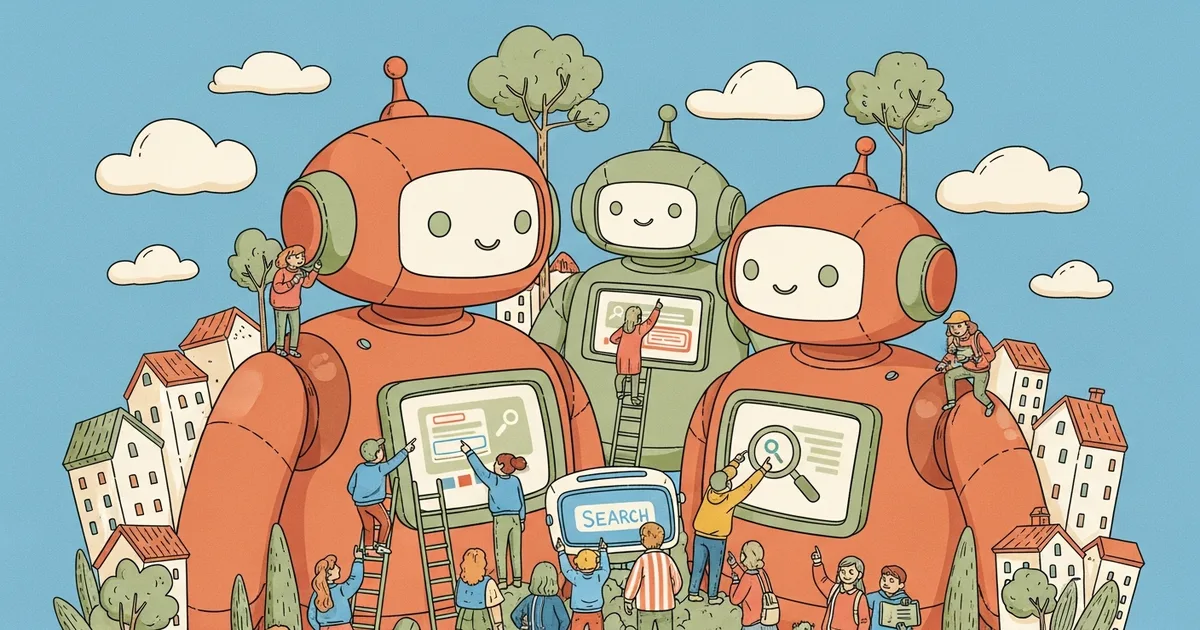
- A February 2026 Pew Research Center survey found that 64% of U.S. teenagers aged 13 to 17 have used AI chatbots to look up information, effectively treating them as search engines.
- Just over half of teens reported using chatbots for help with schoolwork, while 12% said they had sought emotional support from AI tools.
- Teens view AI’s future impact on their lives more positively than negatively, though concerns about accuracy and privacy persist among both teens and their parents.
- The study surveyed 1,453 U.S. teens between October and November 2025, with a margin of error of plus or minus 3.2 percentage points.
What Happened
Pew Research Center published a comprehensive report on February 24, 2026, documenting how American teenagers interact with AI chatbots. The study, authored by senior researcher Colleen McClain, director of Internet and Technology Research Monica Anderson, research analyst Olivia Sidoti, and research associate William Bishop, found that 64% of U.S. teens have used AI chatbots as a way to search for information.
The survey covered 1,453 teens aged 13 to 17 between October and November 2025. Among the findings, 54% of teens reported using chatbots to help with schoolwork, making education the single most common use case. Another 12% said they had turned to AI tools for some form of emotional support. Usage rates were broadly consistent across gender and racial demographics, though older teens aged 15 to 17 reported somewhat higher rates of chatbot use than younger teens.
Why It Matters
The data signals a fundamental behavioral shift in how the next generation discovers and processes information. Rather than typing queries into traditional search engines and evaluating a list of blue links, a majority of teenagers now treat conversational AI as their primary lookup tool. This trend has implications for how schools approach digital literacy curriculum, how search companies retain younger users, and how parents monitor and guide online activity.
Monica Anderson, who directs Pew’s Internet and Technology Research team, noted that “teens tend to view AI’s future impact on their lives more positively than negatively.” That optimism contrasts with the more cautious stance many adults take toward AI adoption, suggesting a generational divide in attitudes that could shape policy debates about AI regulation in education and consumer protection for years to come.
The 12% figure for emotional support use is particularly notable. Teens turning to chatbots for coping, advice, or companionship raises questions about whether these tools are equipped to handle sensitive mental health conversations responsibly, especially when the users are minors.
Technical Details
The survey was conducted online via Ipsos’s KnowledgePanel, which recruits participants using address-based probability sampling to produce nationally representative results. The overall margin of error was plus or minus 3.2 percentage points. Pew weighted the data by age, gender, race, ethnicity, household income, parental education, and geographic region to match U.S. Census Bureau benchmarks for the teen population.
The 64% figure specifically measures teens who said they had “ever used” a chatbot to look up information, as distinct from regular or daily use. Pew distinguished frequency levels within the report, noting that habitual daily users represent a smaller subset while occasional users make up the majority of the 64%. The survey did not identify which specific chatbot products teens used most frequently, though ChatGPT, Google Gemini, and Snapchat’s My AI were mentioned as common examples in the broader context of the research.
Pew’s methodology included a parallel parent survey to capture how adults perceive their children’s AI usage. Results from that companion survey are expected in a follow-up publication later in 2026.
Who’s Affected
The findings are directly relevant to educators, school administrators, and parents of teenagers. Teachers face new challenges around academic integrity and information verification as more students rely on AI-generated answers rather than traditional research methods. School districts that have not yet updated their acceptable-use policies to address AI chatbots may find themselves responding to a practice that is already widespread among their students.
Search engine companies like Google and Microsoft’s Bing stand to lose engagement among younger demographics who find chatbot interfaces more intuitive than traditional search results pages. AI companies including OpenAI, Google, and Anthropic are also implicated, since their products are being used by minors for tasks ranging from homework to emotional coping, raising regulatory and child safety questions.
What’s Next
Pew indicated that additional reports from the same dataset will examine how parents perceive and manage their children’s AI use. The Federal Trade Commission has signaled interest in how AI chatbots interact with minors, though no formal rulemaking has been announced. Meanwhile, several state legislatures have introduced bills that would require age verification or parental consent for minors to access AI chatbot services. Whether these legislative efforts gain traction may depend in part on how quickly the behavioral patterns documented in this report continue to spread.