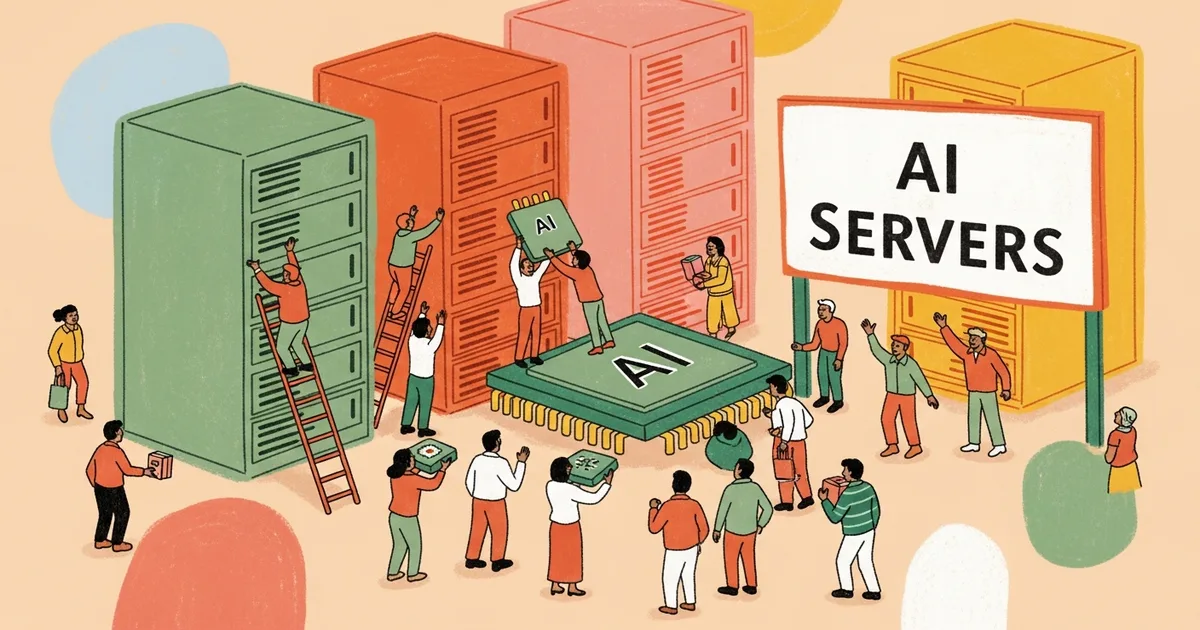
Oracle Corporation (NYSE: ORCL) has begun laying off an estimated 20,000 to 30,000 employees across the United States and India, the Wall Street Journal confirmed on April 2, 2026. The cuts are not a distress signal — they are a financing mechanism. Oracle is converting payroll into GPU clusters.
These oracle layoffs april 2026 represent up to 18% of Oracle’s approximately 164,000 global workforce, making this one of the largest single-week headcount reductions in enterprise software history. The company has not issued a formal public statement.
Oracle Layoffs Confirmed: Up to 30,000 Jobs, WSJ Reports
The Wall Street Journal‘s reporting confirms the range spans 20,000 to 30,000 employees, with cuts hitting both US operations and India — where Oracle maintains one of its largest engineering and support workforces globally, estimated at over 40,000 employees.
Oracle’s silence on the specifics is calculated. The company is letting financial journalists surface the headcount story while executive messaging stays focused on the AI investment narrative. Announce the AI ambition publicly; let the layoff reporting surface on its own timeline. This is practiced misdirection at board-approved scale.
At 30,000 cuts, Oracle is not trimming — it is repricing its entire operating model around a different set of inputs.
Which Oracle Divisions Are Being Cut
Oracle’s known organizational structure points to the highest-risk functions in the current reduction:
- Legacy database and middleware support teams — on-premises product lines being phased toward cloud-only or AI-assisted support
- Oracle Cloud Infrastructure (OCI) support operations — lower-value support tiers being automated out of existence
- India-based development centers supporting older product lines including E-Business Suite and PeopleSoft
- Back-office functions — HR, finance, and administrative operations across both US and India campuses
- Mid-tier management layers in delivery and professional services organizations
Oracle’s core revenue engine is unlikely to see the deepest cuts. According to Oracle’s investor filings, cloud services and license support generated $10.2 billion in Q2 FY2025. The company is trimming around that engine, not the engine itself.
Where Oracle Is Redirecting the Capital: AI Infrastructure
Oracle’s fiscal year 2025 capital expenditure reached approximately $6.9 billion, a figure the company has signaled will roughly double as AI infrastructure demand accelerates. Oracle is a founding partner in the Stargate initiative — the $500 billion US AI infrastructure commitment announced in January 2025 alongside OpenAI and SoftBank — with committed deployments across multiple new US data center campuses.
The arithmetic is blunt. At an average fully-loaded compensation cost of approximately $120,000 per employee, 30,000 roles represent roughly $3.6 billion in annualized payroll savings — enough to procure approximately 120,000 NVIDIA H100 GPUs at list price. Oracle is not making a subtle pivot. It is executing one at scale.
This mirrors the infrastructure acceleration playing out across the industry. Nebius Group’s $10 billion AI data center commitment in Finland is one example of how aggressively capital is being deployed into AI compute — and how human labor is being repositioned as the funding source, not the output.
The Labor-to-Capex Conversion Is Now Industry Doctrine
Oracle is executing a strategy that has become standard operating procedure across enterprise tech. Microsoft cut 6,000 employees in May 2025 while committing $80 billion to AI data centers for FY2025. Meta reduced headcount by approximately 3,600 in February 2025 while announcing $65 billion in AI capital expenditure for the year. Google has conducted rolling reductions while capex guidance has risen each quarter.
The pattern is structurally identical in every case: reductions in functions where AI tooling reduces labor requirements, combined with accelerated capex into the infrastructure that enables that tooling. The efficiency argument is legitimate — AI genuinely reduces the headcount required for software testing, documentation, customer support, and operational monitoring. It is also convenient when a company needs to free up $3–4 billion for GPU procurement without compressing operating margin.
The Humans First movement has framed this as a corporate ethics crisis. The more precise framing: it is a capital allocation decision with a human cost that companies are currently treating as fully externalized.
What Enterprise Tech Workers Need to Understand Right Now
The roles at highest risk are not always the ones that feel most exposed. Legacy Oracle DBAs, middleware engineers, and on-premises support specialists have operated with the implicit protection of system complexity — the assumption being that institutional knowledge accumulated over decades could not be replicated cheaply or quickly. That assumption is being invalidated in real time.
Oracle is not spreading these reductions across 12 months with managed transition programs. The Wall Street Journal‘s reporting indicates cuts began this week — fast operational execution, not a phased workforce evolution.
For enterprise IT leaders running Oracle-dependent systems, the practical steps are immediate:
- Document Oracle-dependent processes now, before support quality degrades over the next 12 months
- Establish direct escalation contacts with Oracle account teams while the staffing still exists to honor them
- Accelerate migration timelines for legacy Oracle deployments where AI-native alternatives are production-ready
- Build 18–24 month contingency plans that assume reduced Oracle support availability and response quality
Enterprise AI adoption is embedding deeply into institutional contracts across the industry. The structure of OpenAI’s enterprise deals with major corporates like Disney illustrates exactly the kind of long-term AI infrastructure commitments Oracle is now rebuilding its workforce to serve — not the 40-year-old ERP deployments it is quietly walking away from.
Oracle in 2030 Is a Different Company Than Oracle in 2020
The business Oracle is building is a GPU-hour reseller and managed AI infrastructure provider with a legacy database and ERP business attached. The database and ERP revenue funds the transition; AI infrastructure is the destination. The workforce reduction is this transition made visible on a balance sheet.
MegaOne AI tracks 139+ AI tools across 17 categories, and the directional trend in enterprise infrastructure is consistent: every major platform vendor is recasting itself as an AI infrastructure company, treating workforce reduction as the financing cost of that pivot. Enterprise AI consolidation is accelerating across acquisitions, capacity agreements, and infrastructure partnerships simultaneously — Oracle is not an outlier, it is the leading indicator.
The 30,000 people receiving notices this week are the visible accounting entry in a spreadsheet Oracle’s board approved months ago. For the enterprise customers who depended on those people: the support infrastructure you relied on is being dismantled in real time. Adapt your vendor dependency now, or negotiate your contingency plans while Oracle still has enough staff to honor them.
Related Reading
- Anthropic Secretly Doubled Its Compute Power — The AI Arms Race Is Now a Hardware War
- Meta Just Announced 4 AI Chips in One Day — The NVIDIA Monopoly Has an Expiration Date
- NVIDIA Just Spent $2 Billion on a Company You’ve Never Heard Of
- Google Unveils TurboQuant Algorithm That Cuts AI Memory Use by 6x and Costs by 50 Percent