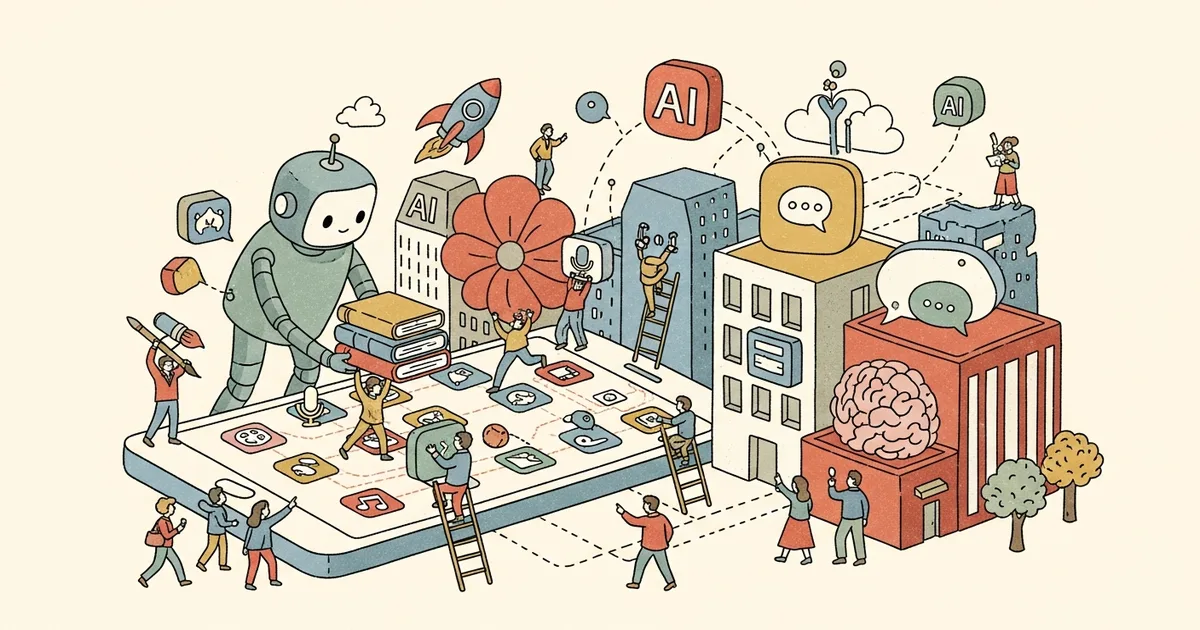
OpenAI acquired Astral on March 19, 2026 — the company behind widely used Python developer tools uv (package manager), Ruff (linter), and ty (type checker). The same day, CNBC reported that OpenAI is merging ChatGPT, its Codex coding app, and the Atlas browser into a single desktop super-app. The company has done nearly as many M&A deals in 2026 as in all of 2025.
The Consolidation Logic
Fidji Simo, OpenAI’s CEO of Applications, told employees the company “realised we were spreading our efforts across too many apps and stacks” and that “fragmentation has been slowing us down.” She also noted they couldn’t afford “side quests” given Anthropic’s rapid success winning enterprise and coding customers.
The Astral team — all Rust-based developer tool specialists — will join OpenAI’s Codex division. Codex receives new agentic capabilities first, then ChatGPT and Atlas browser merge in. The mobile ChatGPT app remains separate, at least initially.
The WeChat Parallel
China’s WeChat pioneered the single-app-that-does-everything model: messaging, payments, shopping, government services, mini-programs — all within one interface. OpenAI is pursuing a similar consolidation for AI tools. A single app where you chat, browse the web, write code, shop, manage files, and interact with third-party services through AI-mediated interfaces.
The difference is distribution. WeChat succeeded because it was already China’s dominant messaging platform — 1.3 billion monthly users. OpenAI has roughly 300 million weekly active ChatGPT users as of early 2026, substantial but not the kind of locked-in user base that WeChat commanded. The super-app strategy puts OpenAI on a collision course with Apple, Google, and Microsoft — companies that already own the operating system layer where super-apps need permission to run.
Sam Altman told staff “things are moving faster than many of us expected.” With GPT-5.4 launched and the next model Spud already done pretraining, OpenAI is pivoting from model company to platform company. Whether the platform play succeeds depends on whether users want AI to be their primary interface to the internet — or just one tool among many.