OpenAI, the San Francisco-based AI company pursuing a contested for-profit restructuring, announced its OpenAI Safety Fellowship on April 8, 2026 — a six-month externally-facing research program running September 2026 through February 2027. The timing isn’t incidental: with OpenAI’s IPO widely expected in late 2026, this fellowship lands squarely in the pre-offering window when perception management matters most to institutional investors.
The program targets external researchers, engineers, and practitioners working on AI safety and alignment — disciplines OpenAI has historically underfunded relative to its capability research budget.
What the OpenAI Safety Fellowship Actually Is
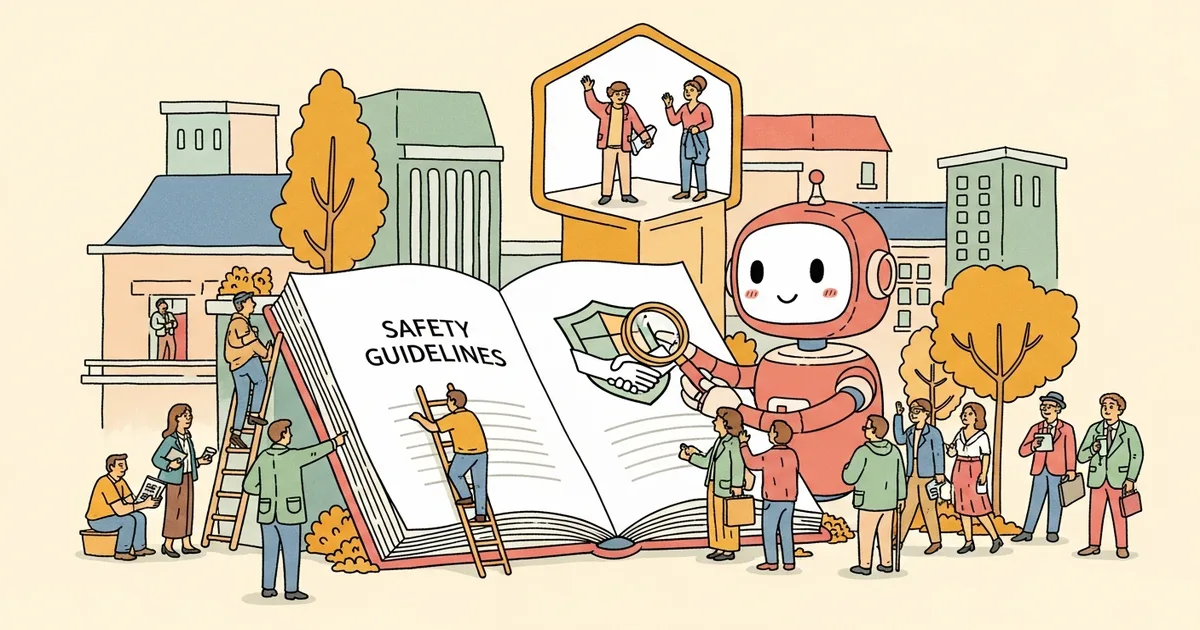
The Safety Fellowship supports independent research on AI safety and alignment, funded and administered by OpenAI but executed outside the company’s walls. That structural choice matters: unlike internal safety teams, external fellows retain independence over their research directions and, critically, their publication rights — at least in principle.
Eligible candidates include researchers at academic institutions, independent practitioners, and engineers with demonstrated work in alignment, interpretability, robustness, or related safety subfields. The six-month duration — September 2026 through February 2027 — places final outputs squarely in the post-IPO period, when a newly public OpenAI will face simultaneous scrutiny from institutional investors, regulators, and a safety research community that has been watching the company’s internal staffing decisions closely.
Who Qualifies for the OpenAI Safety Fellowship
The fellowship’s stated focus on “external researchers, engineers, and practitioners” signals an unusually broad aperture. Most corporate safety programs gate access to credentialed academics with publication records; OpenAI’s framing explicitly includes practitioners — people building and deploying systems, not just publishing papers about them.
Applicants should expect to demonstrate prior work in at least one of the following areas:
- Alignment research (RLHF, scalable oversight, debate-based methods)
- Interpretability and mechanistic analysis of neural networks
- Red-teaming and adversarial robustness evaluation
- Societal impact assessment and policy-adjacent safety work
The practitioner-inclusive framing is a genuine differentiator — but it also raises a pointed question about what “safety” means in OpenAI’s operational vocabulary. This is a company that has expanded autonomous agent deployment, grown API access to production-grade models, and pursued major media partnerships worth over $1 billion that accelerate real-world deployment at a scale no safety fellowship can fully evaluate from the outside.
The IPO Timeline Is Not a Coincidence
OpenAI’s public market debut is the most anticipated technology offering since the AI boom reshaped capital markets. The Safety Fellowship announcement, arriving six months before an expected IPO, lands precisely when institutional investors are forming risk assessments and ESG governance frameworks are being applied to frontier AI companies for the first time.
Safety governance has become a material risk factor. Regulatory pressure from the EU AI Act, US executive orders on AI accountability, and emerging international coordination frameworks means a company without credible external safety investment faces a harder due diligence conversation with allocators managing capital on multi-decade horizons. The fellowship functions as insurance against that conversation — and plausibly as a line item in the S-1 risk mitigation section.
That doesn’t make it insincere. Safety investment that also serves investor relations still funds real researchers doing real work. But the context reshapes how the announcement should be read: this is OpenAI responding to a market signal about what publicly traded AI companies need to demonstrate, not a spontaneous internal reprioritization. Those are different things, and the difference matters for how seriously to weight the commitment.
How This Compares to Anthropic‘s Safety Research Model
Anthropic (the AI safety company founded in 2021 by former OpenAI researchers) built its research architecture around safety from inception. Its Constitutional AI methodology, published and iterated openly, underpins Claude’s training at a foundational level — not as an add-on program with a defined application window and an expiry date.
Where Anthropic’s safety investment is structurally foundational, OpenAI’s fellowship is a defined, time-bounded initiative. The distinction matters: a cohort program can be quietly defunded or not renewed after the IPO without any formal policy reversal. A company whose founding thesis is alignment cannot walk that back without an existential credibility crisis. Even Anthropic’s operational security has had notable public failures, which complicates the pristine safety narrative — but that is a different category of problem than a question of structural commitment to safety as a research priority.
Anthropic does not currently offer an equivalent external fellowship with an open application process. On that narrow metric, OpenAI has a legitimate point of differentiation — provided the research actually influences model development and deployment decisions, not just press coverage volume.
OpenAI’s Internal Safety Track Record
The Superalignment team — OpenAI’s internal flagship alignment initiative — lost several of its founding researchers in 2024, including co-lead Ilya Sutskever, whose departure was read across the industry as a signal of internal tension over safety prioritization relative to commercial velocity. The team was subsequently restructured without a detailed public explanation of how its mandate changed.
Against that backdrop, an externally-facing fellowship reads partly as a trust repair exercise. OpenAI is effectively signaling: if internal safety governance has a credibility problem, we will fund external researchers who operate independently. That’s pragmatic and can be genuinely useful. But external fellows should enter with clear eyes — their work will be associated with OpenAI’s safety narrative whether or not it influences OpenAI’s actual deployment decisions on GPT-next, operator tools, or autonomous agent frameworks.
The broader public accountability conversation about AI is no longer confined to academic safety forums. Policymakers, financial journalists, and institutional investors are asking harder questions. OpenAI’s answers will ultimately be measured against its shipping cadence and incident history, not its fellowship cohort size.
What Researchers Should Ask Before Applying
The fellowship offers something genuinely valuable: funded, independent time on safety research without the constraints of a corporate employment relationship. For researchers who want proximity to OpenAI’s networks, infrastructure credibility, and potential model access without joining the company, this is a real opportunity — with conditions that warrant careful scrutiny before any application is submitted.
Three questions every serious applicant should get concrete answers to before submitting:
- Publication rights: Can fellows publish findings that are critical of OpenAI’s own systems, deployment decisions, or risk assessments? The answer to this question determines whether this is a research program or a marketing program.
- Research access: Will fellows have access to model internals, evaluation frameworks, or training data that makes safety research meaningfully more effective than working from public APIs? Access to model internals is what separates useful interpretability research from public speculation.
- Influence pathway: Is there a defined mechanism for fellowship outputs to reach OpenAI’s technical leadership and shape deployment decisions — or does the research surface as a public PDF that generates favorable coverage and nothing else?
OpenAI’s announcement does not yet answer these questions in binding terms. The answers will determine whether the Safety Fellowship is a research infrastructure investment or a reputation infrastructure investment. Both are real. They are not the same thing, and confusing them will cost researchers both time and credibility.
Apply — But Read the Fine Print
External safety research programs are net positive for the field, regardless of the motives behind them. OpenAI funding independent safety work is categorically better than OpenAI not funding it, full stop. The six-month IPO countdown does not negate the value of funded research time for qualified practitioners who would otherwise be self-financing their alignment work.
MegaOne AI tracks 139+ AI tools and companies across 17 categories, and the pattern across frontier labs is consistent: safety announcements precede major product or capital market events. The Safety Fellowship runs September 2026 through February 2027. The more revealing signal will be what OpenAI ships in Q1 and Q2 2027 — that deployment cadence will determine whether the fellowship shaped technical risk decisions or simply populated the S-1’s responsible AI section.
Apply if the research opportunity is genuinely useful for your work and the terms hold up. Read the intellectual property clauses, the publication restrictions, and the data access provisions carefully. And don’t mistake a time-bounded cohort program for a structural commitment to safety-first development — conflating the two is precisely what the fellowship’s launch framing is designed to encourage.