Key Takeaways
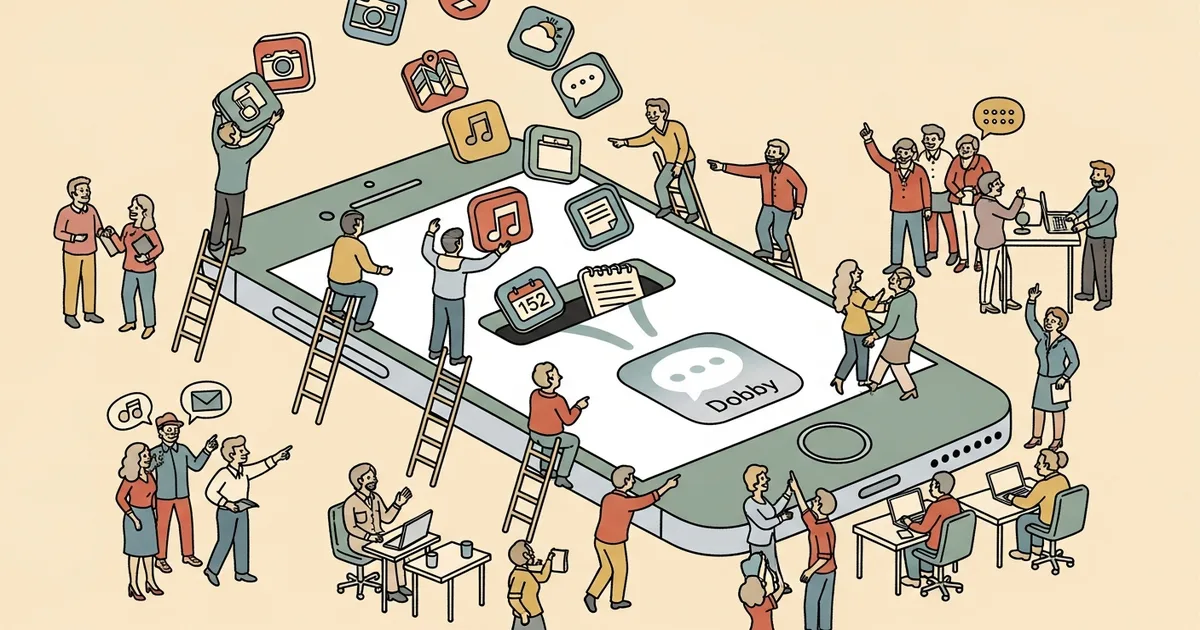
- Andrej Karpathy, former Tesla AI lead and OpenAI co-founder, demonstrated “Dobby the Elf Claw” — an AI agent that replaced six smart home apps on his phone by consolidating control into WhatsApp natural language commands.
- Dobby scans local networks, discovers connected devices, reverse-engineers undocumented APIs, and controls Sonos, lighting, HVAC, pool, spa, security cameras, and shades from a single conversational interface.
- The system is built on OpenClaw, an open-source agentic framework that OpenAI acquired along with its creator Peter Steinberger in February 2026.
- Karpathy described himself as being in a “state of psychosis” trying to push the limits of what AI agents can do, having not written a line of code manually since December 2025.
What Happened
On April 1, 2026, Andrej Karpathy demonstrated “Dobby the Elf Claw,” a custom-built AI agent that controls his entire smart home through WhatsApp messages. The system replaced six separate vendor apps — covering sound (Sonos), lighting, HVAC, security, pool and spa controls, and window shades — with a single conversational interface where Karpathy sends natural language instructions like “turn on the pool lights” or “set the living room to 72 degrees.”
Dobby also monitors Karpathy’s security cameras and sends proactive alerts. In one example, the agent detected a FedEx truck in camera footage and messaged Karpathy to notify him that a package had been delivered to his doorstep — without being asked to check.
Why It Matters
Karpathy is not a random hobbyist. As the former head of AI at Tesla and a co-founder of OpenAI, his experiments carry signal about where AI agent technology is heading. The Dobby demo illustrates a pattern that extends well beyond home automation: instead of users switching between purpose-built apps, a single AI agent acts as a universal interface layer that discovers and controls underlying systems.
The broader framework behind Dobby is OpenClaw, an open-source agentic platform that has spread rapidly through the tech industry. Users have connected OpenClaw to calendars, email, web browsers, task managers, and messaging platforms — consolidating what previously required separate applications into a single agent. OpenAI acquired OpenClaw and its creator, Peter Steinberger, in February 2026, signaling that the major AI labs see this agent-as-interface pattern as commercially significant.
Technical Details
Dobby operates on Karpathy’s local network, which provides a security boundary — the smart home devices it controls are not directly exposed to the internet. The agent scans the network to discover connected devices, then reverse-engineers their APIs, including undocumented ones, to establish control. This means Dobby can integrate with hardware that does not offer official third-party API support, working around the fragmented smart home ecosystem where each manufacturer typically requires its own app.
The WhatsApp integration serves as the user interface layer. Karpathy sends messages in plain English, and Dobby interprets the intent, maps it to the appropriate device API, and executes the command. The system also runs persistent background tasks — such as monitoring security camera feeds for specific events — and pushes notifications back through the same WhatsApp channel.
Karpathy described the broader shift in his workflow in a March 2026 interview with Fortune: “I’m just like in the state of psychosis of trying to figure out what’s possible, trying to push it to the limit.” He said he has not written a line of code manually since December 2025, instead delegating all coding tasks to AI agents. He reported running up to 20 AI agents in parallel during his experimentation.
Who’s Affected
The Dobby experiment has direct implications for smart home platform companies. If AI agents can bypass proprietary apps by reverse-engineering device APIs, the value of vendor-specific ecosystems — Apple HomeKit, Google Home, Amazon Alexa — diminishes. Device manufacturers that have relied on app lock-in as a competitive advantage face a future where users route all interactions through a single AI layer.
For developers, the OpenClaw framework represents a shift in how software gets built. Rather than designing standalone apps with full user interfaces, developers may increasingly build API-first services designed to be consumed by AI agents. Karpathy’s own transition — from writing code to orchestrating agents that write code — previews a workflow change that could reshape software engineering roles.
What’s Next
OpenAI’s acquisition of OpenClaw suggests the framework will be integrated into commercial products, potentially giving ChatGPT and other OpenAI services the ability to control external devices and services through the same agent architecture Karpathy uses at home. The key limitation remains security: agents that reverse-engineer undocumented APIs and operate autonomously on local networks introduce attack surfaces that traditional app-based control does not. Whether this agent-as-universal-interface model scales beyond technical early adopters depends on how quickly the industry standardizes agent-to-device communication protocols and establishes trust frameworks for autonomous operation.