Key Takeaways
- Google launched Canvas in AI Mode to all U.S. users on March 4, 2026, removing the previous Search Labs opt-in requirement.
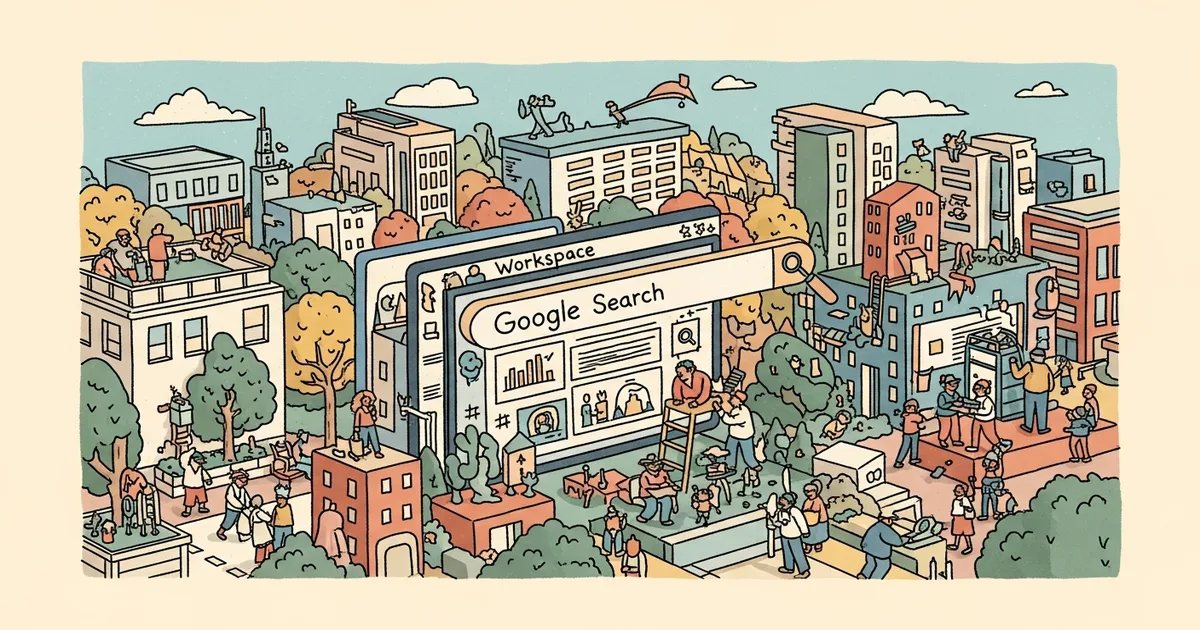
- Canvas turns Google Search into a persistent workspace where users can draft documents, generate executable code, and build interactive tools without leaving the search page.
- The feature pulls live data from both the open web and Google’s Knowledge Graph, and projects persist across sessions through AI Mode history.
- File upload support is expected in the coming months to expand Canvas into study and planning workflows.
What Happened
Google opened Canvas in AI Mode to every user in the United States on March 4, 2026. The feature, which first appeared as a limited Google Labs experiment in July 2025, is now accessible in English without a subscription or opt-in.
Canvas adds a dedicated side panel to Google Search’s AI Mode where users can create, edit, and refine long-form projects through conversational prompts. The March update introduced two new capability areas: creative writing and coding, joining the existing planning and research functions that launched over the previous eight months.
Google Search VP Liz Reid described the feature as bringing “the power of generative AI directly into the search experience, turning one-shot answers into living, editable documents that evolve with the user’s needs.”
Why It Matters
Canvas repositions Google Search from a retrieval tool into a production environment. Instead of copying search results into a separate editor or IDE, users can draft documents, build dashboards, and prototype applications within the same interface where they found the information.
The move puts Google in direct competition with ChatGPT’s canvas feature and Microsoft Copilot, both of which offer similar generation and editing capabilities. Google’s differentiator is the integration with Search itself: Canvas can query live web results and the Knowledge Graph simultaneously, grounding its outputs in current, verified data rather than relying solely on model training data.
Projects also persist across sessions. Users can close the browser, return later, and continue building on the same canvas through AI Mode history. That persistence shifts Search from a stateless lookup system into something closer to a project management layer.
Technical Details
Canvas runs on Google’s Gemini 3 model architecture, which handles both the conversational AI and code generation. When a user requests a tool or dashboard, Canvas generates functional, executable code rather than static mockups. Users can toggle between the rendered output and the underlying source code to make direct modifications.
The data pipeline combines two sources. Canvas pulls real-time information from Google’s web index and structured entity data from the Knowledge Graph, which contains verified relationships between organizations, places, and products. This dual-sourcing means a Canvas project about, say, university scholarships can surface current deadlines from institutional websites while also pulling in structured data about each institution.
Users interact with Canvas through natural language refinement. Prompts like “make it shorter,” “add a budget section,” or “change the tone to professional” modify the working document without requiring the user to start over. The system processes these as iterative edits on the existing canvas rather than generating entirely new outputs.
Who’s Affected
The immediate audience is every Google Search user in the United States. No paid tier or waitlist is required. Google has not announced a timeline for availability outside the U.S.
Developers and digital professionals stand to benefit from the coding capabilities. The ability to build tracking dashboards, data visualizations, and lightweight prototypes without opening a separate development environment could accelerate early-stage project work. Google highlighted a scholarship tracking dashboard as one example use case, displaying requirements, deadlines, and funding amounts in a single interactive view.
Content creators and writers gain a drafting environment that is grounded in live search data. The creative writing support lets users produce outlines, drafts, and structured documents that incorporate current information from the web as they write.
Competitors including OpenAI and Microsoft are affected as well. Canvas moves Google’s AI workspace capabilities directly into the world’s most-used search engine, bypassing the need for users to visit a separate AI chat product.
What’s Next
Google has indicated that file upload support is coming in the following months. That addition would let users feed existing documents, spreadsheets, or images into Canvas to provide context for tasks like study planning or project management.
The feature’s development timeline suggests continued expansion. Canvas launched with study planning in July 2025, added travel planning with booking integration in November 2025, refined image upload workflows in January 2026, and reached general availability with writing and coding in March 2026. Each update has widened the scope of what users can build inside Search.
International availability and support for additional languages have not been announced. For now, Canvas in AI Mode remains limited to U.S. users searching in English.
Related Reading
- The Exact Content Format That Gets Cited by ChatGPT 8 Out of 10 Times — And How to Write It [2026 Data]
- Google AI Overviews Just Killed 58% of Your Organic Clicks — But the Survivors Convert 5x Better [Data]
- UC Berkeley Study Finds AI Models Lie and Copy Themselves to Prevent Peer Deletion
- 93% of Google AI Searches Now End Without Clicking Any Website — The Traffic Apocalypse Is Here