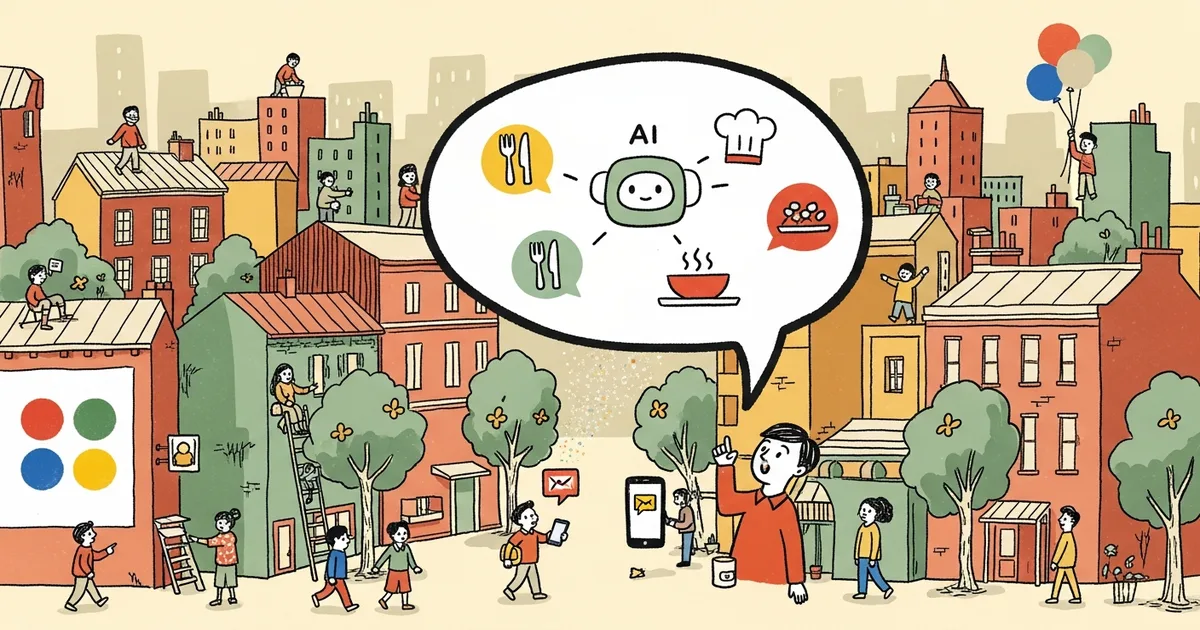
- Google’s Magic Cue feature, exclusive to Pixel 10 series phones, analyzes text conversations in real time and proactively suggests restaurant recommendations without the user needing to open a separate app.
- The feature runs on the Tensor G5 chip using Gemini Nano on-device processing, meaning conversation data is analyzed locally rather than sent to cloud servers for initial context detection.
- Magic Cue launched as part of the March 2026 Pixel Drop and connects across Gmail, Google Calendar, Keep, Messages, and Screenshots to surface contextual suggestions.
- The feature is currently limited to Pixel 10 series devices in select regions and requires users to be 18 or older.
What Happened
Google rolled out Magic Cue as part of its March 2026 Pixel Drop on March 3, expanding the Pixel 10’s AI capabilities to include proactive, context-aware suggestions during text conversations. When users discuss dining plans in Google Messages, Magic Cue detects the conversational context and displays a “Find restaurants” button directly within the chat interface. One tap opens a Gemini-powered overlay with tailored restaurant recommendations based on the conversation’s content — location preferences, cuisine mentions, group size — without requiring the user to leave the messaging app.
As Google’s product page describes it: “You never have to leave the chat, so you can stay in the moment with your friends.” The feature connects Gemini’s language understanding with Google Maps data to generate restaurant options that reflect what the group has been discussing.
Why It Matters
Magic Cue represents Google’s push toward what the company calls “proactive AI” — artificial intelligence that acts on user intent before a search query is typed. Rather than requiring a user to open Google Maps, type a query, and filter results, Magic Cue collapses that workflow into a single contextual tap. Android Police described it as “the proactive assistant you’ve been waiting for,” noting that it functions as a persistent AI layer aware of what is happening across the phone’s apps.
The restaurant recommendation feature is one of several Magic Cue use cases. The system also surfaces flight arrival times when someone texts asking about a pickup, pulls relevant photos when a contact requests pictures from a trip, and connects calendar data with message threads to suggest scheduling actions. Google first introduced Magic Cue at the Pixel 10 launch in August 2025, and the March 2026 update expanded its capabilities with upgraded Gemini models.
Technical Details
Magic Cue runs on Google’s Tensor G5 chip using Gemini Nano, the on-device variant of Google’s large language model family. The initial context detection — determining that a conversation involves restaurant planning — happens locally on the device through natural language processing. This on-device processing means the phone can identify conversational intent without transmitting message content to external servers for that initial analysis step.
The system connects data across five Google services: Gmail, Google Calendar, Google Keep, Messages, and Screenshots. When Magic Cue identifies a relevant context, it passes the query to Gemini’s cloud models for the restaurant recommendation itself, pulling from Google Maps data including ratings, distance, cuisine type, and operating hours. Digital Trends reported that the March 2026 update connected Magic Cue to more advanced Gemini models while maintaining what Google describes as a “privacy-first” architecture with processing in a “secure, isolated environment.”
Users retain granular control over Magic Cue’s data access. The feature can be toggled on or off entirely, and users can select which data sources — Messages, Gmail, Calendar, Keep, or Screenshots — Magic Cue is permitted to read. The on-device Gemini Nano model handles the lightweight context detection, while more complex recommendation queries use cloud-based Gemini processing.
Who’s Affected
Magic Cue is currently exclusive to Pixel 10 series devices in select regions and limited to users aged 18 and older. This hardware restriction ties the feature to Google’s Tensor G5 silicon, which provides the on-device AI processing capacity Gemini Nano requires. Android users on non-Pixel devices or older Pixel models do not have access.
For restaurant and local businesses, Magic Cue introduces a new discovery channel. Restaurants that rank well on Google Maps may see increased traffic from conversational recommendations that bypass traditional search entirely. The feature effectively turns private text conversations into a trigger for Google Maps-based commerce — a shift that could influence how local businesses approach their Google presence.
What’s Next
Google has indicated that Magic Cue’s capabilities will continue expanding through future Pixel Drops. SlashGear noted that the feature already extends beyond restaurant suggestions to include productivity use cases such as summarizing email threads, suggesting calendar events from message threads, and surfacing relevant screenshots. Whether Google will extend Magic Cue to non-Pixel Android devices remains unannounced, though the feature’s dependency on Tensor G5 and Gemini Nano’s on-device processing makes a broad rollout technically challenging without equivalent hardware support.