- Alibaba launched Wukong, an enterprise AI agent platform that coordinates multiple agents through a single interface, available standalone or via DingTalk.
- CEO Eddie Wu formed a new division called Alibaba Token Hub, consolidating the Tongyi Laboratory, Qwen AI unit, and Wukong under one group.
- Three senior members of the Qwen team have departed in 2026, including heads of post-training and coding.
- China now has over 700 registered generative AI products, according to the Cyberspace Administration of China.
What Happened
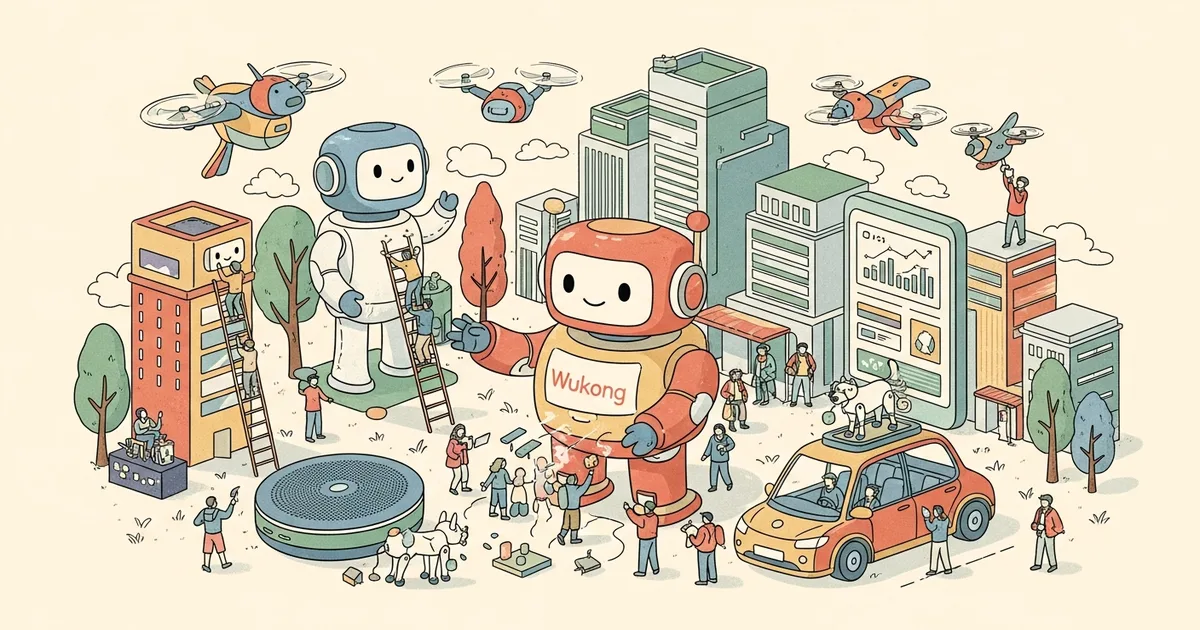
Alibaba unveiled Wukong on March 17, 2026, an AI agent platform designed for enterprise clients that can coordinate multiple agents to handle complex tasks within a single interface. The platform is available as a standalone desktop application or integrated into DingTalk, Alibaba’s workplace collaboration tool used by millions of businesses across China.
The launch came one day after Alibaba CEO Eddie Wu announced the creation of Alibaba Token Hub (ATH), a new business group that consolidates the company’s Tongyi Laboratory, Qwen AI unit, MaaS business line, and Wukong enterprise platform under a single division. Wu described ATH’s mission as to “create tokens, deliver tokens and apply tokens,” naming the group after the tokens generated by large language models during inference.
The restructuring follows a difficult period for Alibaba’s AI ambitions. Three senior members of the Qwen team have left the company in 2026. Yu Bowen and Hui Binyuan, who headed post-training and coding respectively, departed earlier this year. A third senior resignation, from a researcher identified as Lin, marked the latest exit and the third from the Qwen leadership team in a matter of months.
Why It Matters
Wukong arrives in a Chinese AI market that has grown rapidly and with minimal Western visibility. As of December 2025, over 700 generative AI large model products had completed official filing procedures with the Cyberspace Administration of China (CAC), according to state media outlet CGTN. Major companies including Baidu, Tencent, Huawei, and ByteDance have embedded foundation models into cloud platforms, e-commerce tools, and consumer applications serving hundreds of millions of users. AI-native startups like Zhipu AI, Moonshot AI, MiniMax, and DeepSeek have also raised substantial capital and released competitive models.
Alibaba’s decision to centralize its AI operations under Token Hub reflects a broader industry trend: Chinese tech companies are shifting from research-stage AI to commercially deployable agent platforms. Wukong is designed to handle document editing, approvals, meeting transcription, and research tasks for enterprise customers, targeting practical business automation rather than consumer chatbot interactions.
Technical Details
Wukong operates as an agent orchestration layer. Rather than running a single large language model, it coordinates multiple specialized agents through what Alibaba describes as “enterprise-grade security infrastructure.” Each agent handles a specific function, such as document processing or workflow approvals, while Wukong manages task routing and coordination between them. The platform is currently in an invitation-only testing phase with no public launch date confirmed.
Integration with Slack and Microsoft Teams is on Alibaba’s product roadmap, a move that would extend Wukong’s reach beyond the Chinese enterprise market into Western collaboration environments. The platform already connects to DingTalk, which Alibaba uses as its primary hub for workplace productivity tools across China.
The Token Hub division will also oversee Alibaba’s broader AI innovation efforts and the Qwen model series. This consolidation places AI model development, enterprise deployment, and commercialization under a single organizational structure reporting directly to CEO Eddie Wu, signaling that AI is now a top corporate priority rather than a research initiative.
Who’s Affected
Enterprise software buyers in China now have another AI agent platform competing alongside offerings from Baidu, ByteDance, and Tencent. Alibaba’s existing DingTalk user base gives Wukong a built-in distribution channel that competitors lack, though the invitation-only phase limits near-term impact.
The Qwen team departures raise questions about the stability of Alibaba’s core model development. Losing three senior researchers in a single year could slow progress on the underlying models that power Wukong and other Alibaba AI products, particularly in the post-training and coding capabilities where the departed researchers specialized.
International enterprise customers may eventually be affected if Slack and Teams integrations materialize, placing a Chinese-developed AI agent platform inside Western collaboration tools for the first time at this scale.
What’s Next
Wukong remains in closed testing with no public release date announced. The planned Slack and Teams integrations do not have a confirmed timeline. Whether Alibaba can stabilize its Qwen research team while simultaneously commercializing through Token Hub will likely determine if Wukong gains meaningful traction beyond Alibaba’s existing ecosystem.