- Gig workers are earning around $80 for two hours of usable video, filming themselves doing household chores to generate training data for humanoid robots.
- Major companies including DoorDash, Scale AI, and Encord are recruiting workers globally, with micro-tasking firm Micro1 operating in over 50 countries.
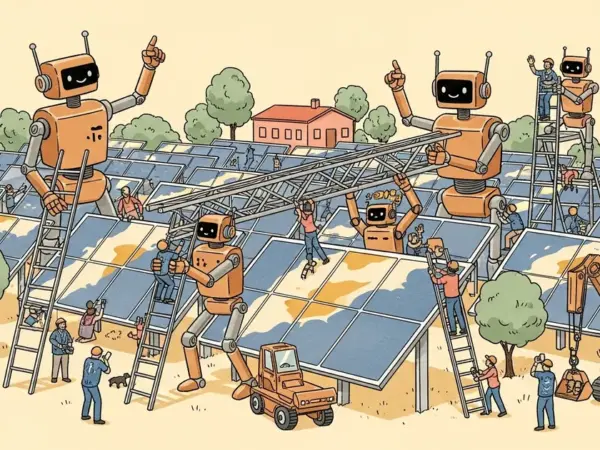
- The humanoid robotics sector attracted over $6 billion in investment in 2025, with Tesla, Google, Figure AI, and others racing to build capable machines.
- Critics warn the workers generating this data could ultimately be displaced by the very robots they are helping to train.
What Happened
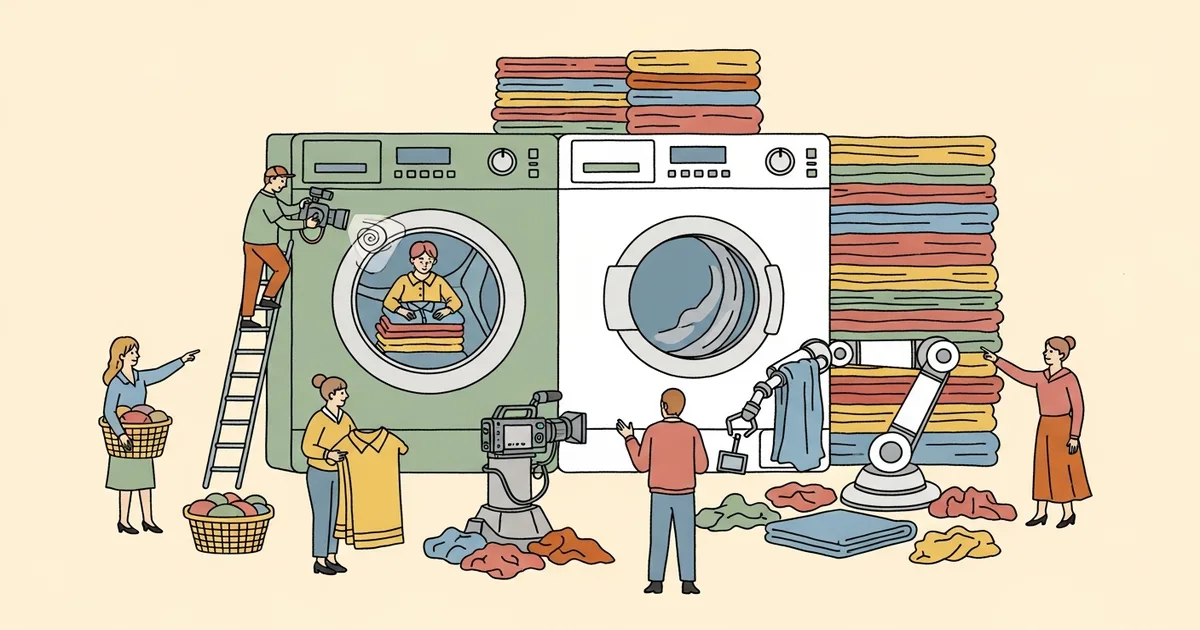
A growing number of gig workers across the globe are being paid to film themselves performing everyday household tasks — folding laundry, loading dishwashers, handwashing dishes, and cooking meals — to create motion datasets used to train humanoid robots. Companies like Scale AI, Encord, and staffing platform Instawork are actively recruiting these data recorders, while DoorDash has launched a dedicated app called Tasks that lists paid filming opportunities for its delivery drivers.
Workers typically earn about $80 for roughly two hours of usable footage. In some cases, they strap iPhones to their heads to capture first-person perspectives of routine activities. Workers in Nigeria and India have adopted this head-mounted approach to record themselves completing domestic tasks from the robot’s eventual point of view.
Micro1, a micro-tasking company, has recruited thousands of workers across more than 50 nations, including India, Nigeria, and Argentina, to participate in this emerging form of data labor. The demand is being driven by technology companies from Tesla and Google to California-based startups like Figure AI and Dyna Robotics.
Why It Matters
The race to build humanoid robots capable of performing complex physical tasks has created an unexpected new segment of the gig economy. Technology companies need massive volumes of real-world motion data to teach robots how humans actually move through domestic environments, grip objects of different sizes, and sequence multi-step chores. Without this data, even the most sophisticated robotic hardware remains unable to replicate basic household actions.
The scale of investment underscores the urgency. Investors poured more than $6 billion into humanoid robotics in 2025 alone, and the demand for high-quality training data continues to accelerate as companies push toward commercial deployment. The data bottleneck — not hardware — is what currently separates prototype robots from production-ready machines.
Technical Details
The data collection process typically involves workers wearing head-mounted cameras or using fixed recording setups to capture continuous video of task completion. These recordings are then annotated and processed into motion datasets that teach robotic systems how to interpret spatial relationships, plan grasping motions, and replicate physical movements in sequence.
The technical challenge is substantial. A robot learning to fold a towel needs to understand fabric deformation, grip pressure, and the spatial geometry of folding patterns — all of which must be derived from thousands of recorded examples showing human hands performing the same task from multiple angles and in varying conditions.
DoorDash’s Tasks app extends beyond household filming to include other paid data-generation activities, such as recording unscripted conversations in Spanish. The variety reflects the breadth of training data that AI and robotics companies require — not just visual and motion input, but audio and linguistic data as well. The app effectively transforms DoorDash’s existing delivery driver network into a distributed data collection workforce.
Who’s Affected
The immediate beneficiaries are gig workers who gain a new income stream that can be performed from home without the physical demands of food delivery or warehouse work. Workers in lower-income countries stand to benefit disproportionately, as the pay rates, while modest by U.S. standards, can be locally competitive.
However, labor advocates have raised significant concerns. The compensation may be inadequate relative to the commercial value of the data being generated. Privacy issues arise from extensive video recordings of workers’ homes and daily routines. Most critically, the workers filming themselves folding clothes and washing dishes are generating the exact data needed to automate those same tasks — potentially eliminating the need for human labor in domestic services within the coming decade.
What’s Next
The gig-to-robotics data pipeline is expected to expand as more companies enter the humanoid robot market and existing players scale their training efforts. DoorDash’s entry signals that established gig platforms see data collection as a viable extension of their existing labor networks. The key limitation remains whether recorded video alone can provide sufficient training signal for robots to operate reliably in unpredictable real-world environments, or whether more sophisticated sensor data — including depth cameras, force sensors, and tactile feedback — will ultimately be required to bridge the gap between demonstration and autonomous execution.