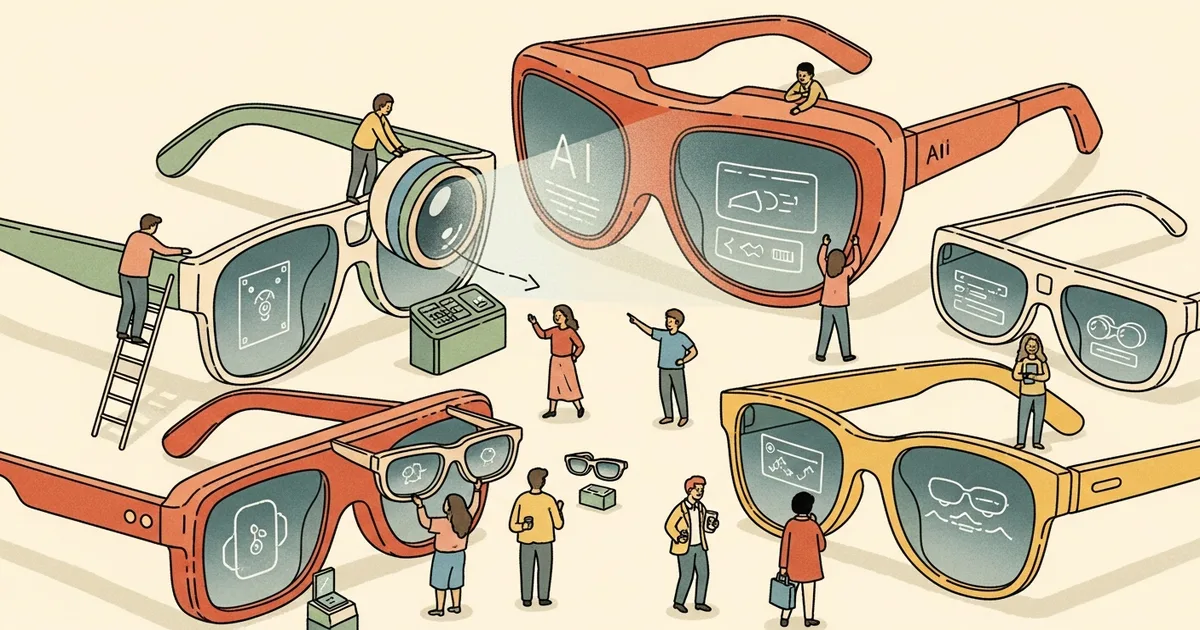
- Alibaba announced new smart glasses powered by its Qwen AI assistant at MWC Barcelona 2026, with online and offline presales starting on the first day of the conference.
- Global smart glasses shipments more than doubled in the first half of 2025, driven by Meta’s Ray-Ban Meta glasses and new entrants from Xiaomi and Baidu.
- Chinese tech companies including Alibaba, Xiaomi, and Baidu are competing directly with Meta in the AI wearables market, with devices priced between $277 and $317.
- Alibaba also plans to launch AI rings and AI earphones for global markets in 2026.
What Happened
Alibaba Group confirmed at MWC Barcelona 2026 that it would launch new smart glasses powered by its Qwen AI assistant, with presales beginning on the opening day of the conference. A company representative confirmed the launch on Saturday ahead of the Monday start.
This is Alibaba’s second major smart eyewear product. The company previously launched its Quark AI Glasses in November 2025, priced from 1,899 yuan (approximately $277). The new Qwen-powered glasses represent a shift from the Quark brand to Alibaba’s flagship AI model.
Alibaba was not the only company bringing AI wearables to MWC. The conference has become a showcase for the growing smart glasses category, with multiple Chinese and American companies positioning AI-powered eyewear as the next major computing platform after smartphones.
Why It Matters
Smart glasses have moved from a niche curiosity to a fast-growing product category. Global shipments more than doubled in the first half of 2025, according to industry data cited by the South China Morning Post. Meta’s Ray-Ban Meta glasses drove much of that growth, but Chinese manufacturers are now entering the market at aggressive price points.
The competition matters because AI glasses are a bet on where people will interact with AI assistants in the future. Instead of pulling out a phone or sitting at a computer, users can ask questions, get translations, and receive information through glasses that look like normal eyewear. The company that establishes the dominant platform in this category could control a major new interface for AI interaction.
Technical Details
The competitive landscape in AI glasses now includes several products at varying price points. Xiaomi launched its smart glasses in June 2025 at 1,999 yuan (approximately $276). Baidu released its Xiaodu AI Glasses Pro in November 2025 at 2,299 yuan (approximately $317). Alibaba’s earlier Quark model started at 1,899 yuan ($277).
Each product is powered by its manufacturer’s own AI assistant: Alibaba uses Qwen, Baidu uses its Ernie-based Xiaodu assistant, and Xiaomi uses its proprietary AI. Meta’s Ray-Ban Meta glasses use Meta AI. This means the smart glasses market is also a proxy competition between AI model ecosystems, with each company trying to lock users into its assistant platform.
The hardware form factor typically includes a camera, microphone, speakers, and connectivity to a smartphone app that handles the heavy AI processing. Battery life and display capabilities vary across models, with most current devices focusing on audio interaction rather than full augmented reality displays.
Who’s Affected
Consumers in China have the widest selection of AI glasses, with at least four major brands competing on price and features. International availability varies. Alibaba confirmed plans to bring AI wearables including rings and earphones to global markets in 2026, suggesting its glasses may follow.
Meta currently dominates the Western market for AI glasses through its partnership with Ray-Ban. The entry of Chinese competitors at similar or lower price points could pressure Meta on pricing if those products reach international markets. Optical retailers and traditional eyewear companies face a market shift as technology companies move into their territory.
What’s Next
Alibaba plans to expand its AI wearables lineup beyond glasses to include AI rings and AI earphones for global markets. The broader question is whether any of these devices will cross over from early adopter gadgets to mainstream consumer products. Current limitations include battery life, the lack of true augmented reality displays in most models, and the unresolved social awkwardness of wearing a camera on your face in public. The next milestone to watch is whether any manufacturer ships glasses with a built-in display capable of showing information in the user’s field of view at a consumer-friendly price.