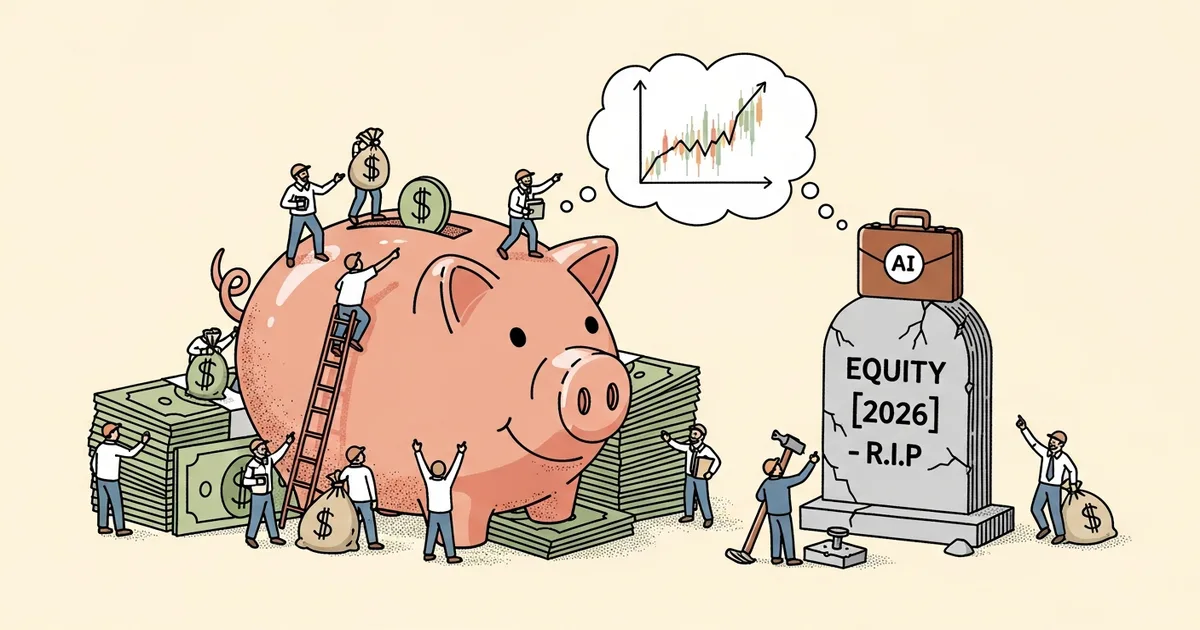
- Software engineers at venture-backed AI startups now receive median base-salary offers of $200,000, a 25% increase from 2022, with top graduates commanding over $300,000 in total compensation.
- Equity grants remain roughly 26% lower than pre-2022 levels, with only 32% of vested in-the-money options exercised in late 2024, signaling widespread skepticism about startup equity value.
- AI engineer compensation now rivals or exceeds first-year big law associate salaries of $225,000 and investment banking analyst pay, reshaping traditional prestige-career economics.
- Nvidia CEO Jensen Huang has proposed supplementing engineer base pay with AI tokens, reflecting a broader shift away from conventional equity models.
What Happened
AI startups are offering entry-level engineers cash compensation packages starting at $220,000 or more per year, according to recruiting data compiled by multiple industry sources in early 2026. Fortune reported on March 31 that some newly minted computer science graduates are fielding offers upward of $300,000 annually — wages once reserved for seasoned engineers at Big Tech giants. Chris Vasquez, CEO of startup recruiting firm Quantum, confirmed the trend, noting that a select group of elite candidates can command these figures even straight out of university.
The median base-salary offer for software engineers at venture-backed startups has reached $200,000, according to data from TopStartups.io. For context, the National Association of Colleges and Employers projects the average starting salary for all computer science majors at roughly $81,500 for the class of 2026 — meaning top AI candidates earn nearly three times the field-wide average.
Why It Matters
The compensation surge reflects a fundamental shift in how AI startups attract talent. Where equity packages once served as the primary lure — promising life-changing payouts if a company hit an IPO or acquisition — cash is now king. Ravio’s 2026 compensation report found that equity grants remain approximately 26% lower than pre-2022 levels, with only 32% of vested in-the-money options exercised in late 2024 compared to 54% a few years earlier. Many employees let their options expire worthless, signaling deep skepticism about equity upside.
As Ravio’s analysis noted, today’s compensation “new normal” puts more onus on cash and company mission to drive retention, whereas “equity alone is a weaker hook than it was in frothier times.” The 90% startup failure rate means most equity grants end up worth nothing to employees, and even successful startups often return less to common shareholders than the total capital raised, with investors claiming priority in liquidation events.
Technical Details
The salary escalation is concentrated in specific AI specializations. Axiom Recruit’s 2026 compensation data shows that Large Language Model engineers earn 25-40% more than general machine learning engineers, while MLOps specialists who deploy and scale AI systems command 20-35% premiums over baseline AI engineering roles. Senior AI engineers at OpenAI and Google earn between $550,000 and $850,000 in total annual compensation.
AI and ML roles carry a 12% premium at the individual contributor level and a 3% premium at the management level compared to non-AI roles in the same organizations, according to Ravio’s talent trends analysis. The premium is driven by a constrained talent pool: new AI tools make it faster than ever to build and scale companies, but the pool of engineers capable of building the underlying models and infrastructure remains small.
The numbers now place AI engineering compensation alongside — and in many cases ahead of — traditional prestige-career paths. First-year big law associates earn a starting salary of $225,000 under the Cravath scale, reaching approximately $250,000 with year-end bonuses. Entry-level AI roles at well-funded startups match or exceed this figure without requiring three years of law school and the bar exam.
Who’s Affected
The shift hits startup founders hardest. Companies that cannot offer $200,000-plus base salaries risk losing candidates entirely — not to other startups, but to Big Tech firms or well-funded AI labs that combine high base pay with meaningful equity. Even lesser-known startups now offer compensation packages between $300,000 and $400,000 annually for high-potential candidates, Fortune reported.
New compensation models are emerging in response. Nvidia CEO Jensen Huang proposed in March 2026 giving engineers roughly half their base pay on top as AI tokens — a hybrid model that sidesteps traditional equity entirely. Meanwhile, a January 2025 industry report found that 64% of senior engineers prioritized the quality of a company’s data stack over a 15% pay increase, suggesting that compensation alone does not close deals at the senior level.
What’s Next
The salary arms race shows no sign of slowing. Venture-backed AI startups raised record funding in Q1 2026, and a significant portion of that capital flows directly into engineering compensation. Companies that rely on equity-heavy, low-cash offers will likely face mounting attrition as engineers increasingly treat startup stock options as lottery tickets rather than reliable compensation. The next inflection point may come if and when AI development tools reduce the number of engineers needed per project, potentially cooling demand — but that shift has not yet materialized in hiring data.