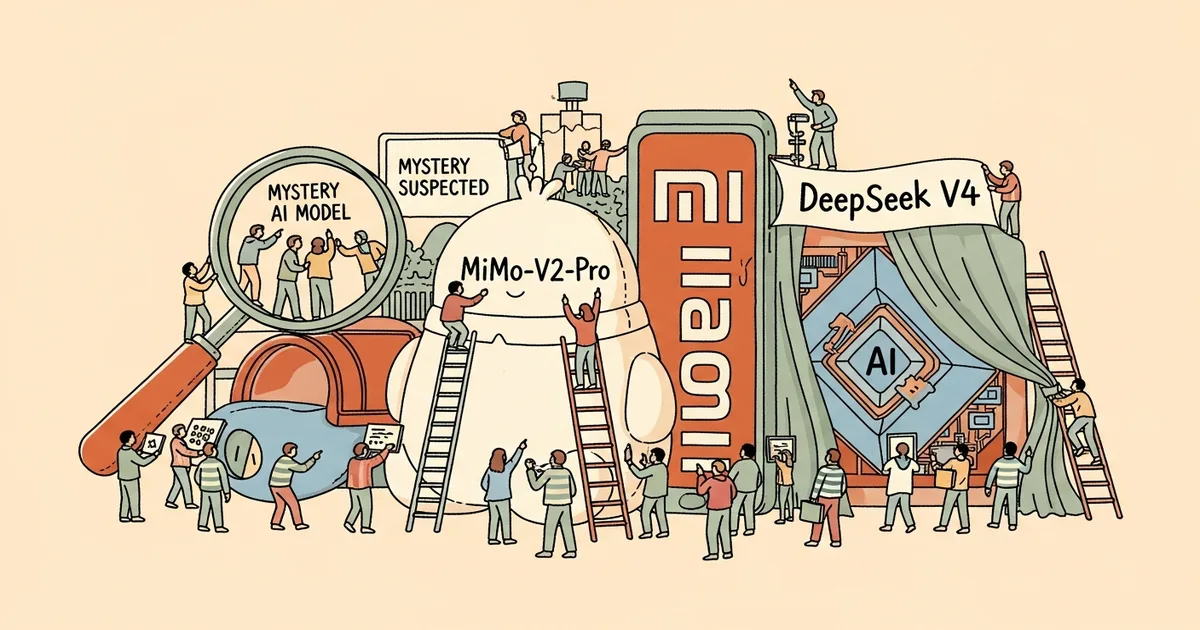
A powerful anonymous AI model called Hunter Alpha that appeared on the AI gateway platform OpenRouter on March 11 and was widely suspected to be DeepSeek V4 has been revealed as an early internal test build of Xiaomi’s MiMo-V2-Pro — a 1-trillion-parameter model developed by the Chinese smartphone and EV manufacturer’s AI research team.
The reveal came on March 19 when Xiaomi’s MiMo AI team, led by former DeepSeek researcher Luo Fuli, confirmed that Hunter Alpha originated from their lab. The model had generated intense speculation in the AI community during its eight days of anonymous operation on OpenRouter, where users tested it against frontier models and noted performance competitive with the best available systems. The DeepSeek V4 speculation was fueled by the model’s strong performance on coding and reasoning benchmarks — capabilities associated with DeepSeek’s research focus.
MiMo-V2-Pro’s 1-trillion-parameter architecture represents a significant escalation in Xiaomi’s AI ambitions. The company is primarily known for smartphones, consumer electronics, and more recently electric vehicles — not frontier AI research. The hiring of Luo Fuli from DeepSeek signals that Xiaomi is building a serious AI research capability by recruiting from China’s most prominent AI lab, following a pattern where large Chinese technology companies use talent acquisition from specialized AI startups to accelerate their own model development.
The anonymous release strategy was deliberate. By launching Hunter Alpha without branding on OpenRouter, Xiaomi obtained unbiased benchmark results and community feedback before revealing the model’s origin. Users evaluated the model on its merits rather than through the lens of expectations associated with the Xiaomi brand — which carries weight in consumer electronics but limited credibility in frontier AI. The positive reception during the anonymous period gives Xiaomi a validated performance narrative to accompany the official MiMo-V2-Pro launch.
For the broader AI landscape, the episode illustrates how quickly the competitive field is expanding. A model from a company best known for budget smartphones performed well enough to be mistaken for the next release from one of China’s leading AI research labs. The barriers to building competitive large language models continue to fall — not because the technical challenges have diminished, but because the talent, training techniques, and infrastructure required are increasingly available to well-capitalized companies outside the traditional AI lab ecosystem.