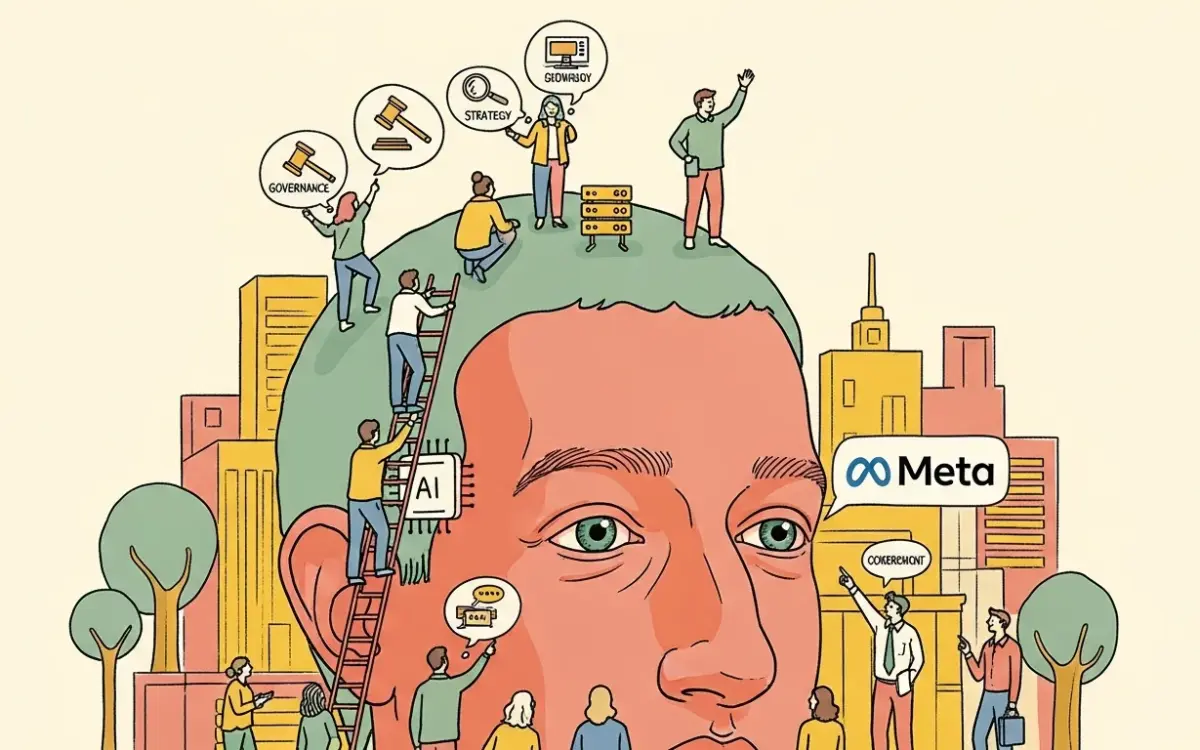
Meta CEO Mark Zuckerberg is developing a personal artificial intelligence agent capable of performing some of his executive duties autonomously, according to a report from The Independent citing The Wall Street Journal.
The AI tool allows Zuckerberg to bypass human reports and corporate management layers to retrieve information directly. This development is part of Meta’s broader strategy to integrate AI systems into all employee workflows across the Facebook and Instagram parent company.
Meta has deployed several internal AI tools including ‘Second Brain,’ designed to search and organize company documents, and ‘My Claw,’ which can communicate with other colleagues’ AI agents on their behalf. The company has also established an internal messaging group that allows AI bots to communicate with each other independently.
The initiative aligns with a Silicon Valley trend called ‘Tokenmaxxing,’ first reported by The New York Times, where engineers at Meta, OpenAI and other tech firms maximize their use of AI tokens—the units of data processed by AI systems—to increase workplace efficiency. Software engineer Gergely Orosz noted: “Inside large tech companies, it’s becoming a career risk to not use AI at an accelerated pace, regardless of output quality.”
During a company earnings call last month, Zuckerberg outlined Meta’s AI integration plans. “We’re investing in AI-native tooling, so individuals at Meta can get more done,” he said. “We’re elevating individual contributors and flattening teams. We’re starting to see projects that used to require big teams now be accomplished by a single very talented person.”
Meta has recently acquired agent-focused startups Manus and Moltbook to support this push, despite ongoing controversies around autonomous AI. Security experts have raised concerns about insufficient safeguards for AI agents, which could lead to data breaches and inappropriate behaviors. Syracuse University professor Adam Peruta warned: “The key lesson is that once you connect semi-autonomous agents to real data and real services, you must treat the platform like critical infrastructure.”