Six months after OpenAI launched its ChatGPT app marketplace, third-party developers say the platform has delivered far less than its early promise, according to a Bloomberg report published March 30, 2026. Apps built on the platform operate under significant technical constraints, and developer frustration has become a recurring theme. Author details for the Bloomberg report were not available at time of publication.
- OpenAI’s ChatGPT app marketplace produced limited results in its first six months, with developers reporting restricted functionality and a constrained sandbox environment.
- ChatGPT apps have no access to external APIs, file systems, or persistent state — reducing many to what developers described as glorified prompt templates rather than full applications.
- OpenAI leadership explicitly invited comparisons to Apple’s App Store, but the technical baseline for ChatGPT apps falls well short of what iOS provides developers.
- Apple, which operates across 2.2 billion active devices, is now pursuing its own AI platform strategy — adding competitive pressure to OpenAI’s marketplace ambitions.
What Happened
Bloomberg reported on March 30, 2026 that OpenAI’s ChatGPT app store — launched approximately six months prior as a marketplace for AI-powered third-party tools — has produced underwhelming results. Developers reported that the platform’s technical restrictions prevent them from building the kind of full-featured applications they anticipated when the store was announced. The reporting identifies both structural limitations in the platform and widespread developer dissatisfaction.
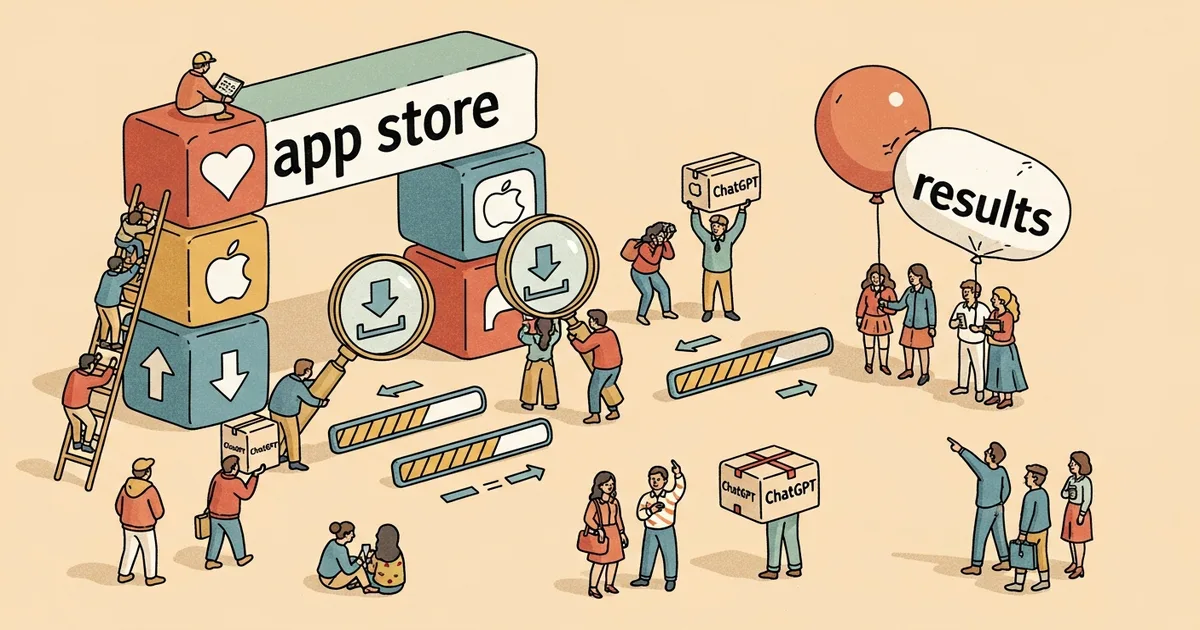
The store was explicitly positioned by OpenAI’s leadership as an AI equivalent of Apple’s App Store: a curated marketplace where external developers could build and distribute specialized tools on top of ChatGPT’s underlying models. That framing set expectations the platform has not yet met.
Why It Matters
Platform ecosystems are notoriously difficult to establish. Apple’s App Store succeeded in part because it gave developers access to device-level capabilities — cameras, GPS, local storage, accelerometers, and native UI frameworks — that made mobile apps genuinely useful to end users. The ChatGPT app store, as currently implemented, does not offer comparable depth.
The timing of the Bloomberg report coincides with Apple’s own reported pivot toward an AI platform strategy that mirrors the App Store model. If Apple delivers meaningful developer tools and AI-native distribution, OpenAI’s text-based marketplace could face competition from a company with 2.2 billion active devices and an established developer economics track record.
Technical Details
According to Bloomberg’s reporting, ChatGPT apps operate inside a sandbox that limits developers in three concrete areas: access to external APIs, interaction with local file systems, and the ability to maintain persistent state across sessions. These are not edge-case limitations. The absence of persistent state alone means apps cannot accumulate user context over time — a baseline requirement for most practical software tools.
Developers who entered the marketplace expecting to build standalone applications described the constraints as reducing their work to glorified prompt templates. The distinction is significant: a prompt template is a reusable instruction set for the underlying model, not a functional application. That gap reflects the limits of what the current platform architecture supports.
Unlike iOS applications — which can call system hardware, render native interfaces, run background processes, and persist data locally — ChatGPT apps are restricted to a text-in, text-out exchange. Customization of the underlying model’s behavior is also described as limited, leaving developers with little ability to adjust outputs beyond standard prompting techniques.
Who’s Affected
Third-party developers who built or began building products on the ChatGPT app platform are the most directly affected. Companies and independent builders who allocated resources based on the Apple App Store comparison are now working within constraints that were not clearly communicated at launch.
Enterprise buyers and end users seeking specialized AI tools through ChatGPT’s marketplace are also affected. The restricted functionality means fewer capable applications are available than the platform’s positioning implied. Organizations that evaluated the ChatGPT app ecosystem as a viable software procurement channel may need to revisit those assessments given the current technical ceiling.
What’s Next
Bloomberg’s reporting does not indicate that OpenAI has announced specific changes to address the sandbox constraints developers have cited. Whether the company plans to expand external API access, enable persistent state, or allow deeper model customization is not clear from publicly available information as of April 2, 2026.
The competitive dynamic with Apple is the more consequential near-term variable. Apple’s AI platform push, if it delivers developer infrastructure at the scale of its existing ecosystem, would present a well-resourced alternative with significantly more distribution reach. OpenAI’s marketplace will need to resolve its core technical constraints to maintain relevance as larger platform players finalize their own AI developer strategies.